
INVENTION
How Superadobes came to existence
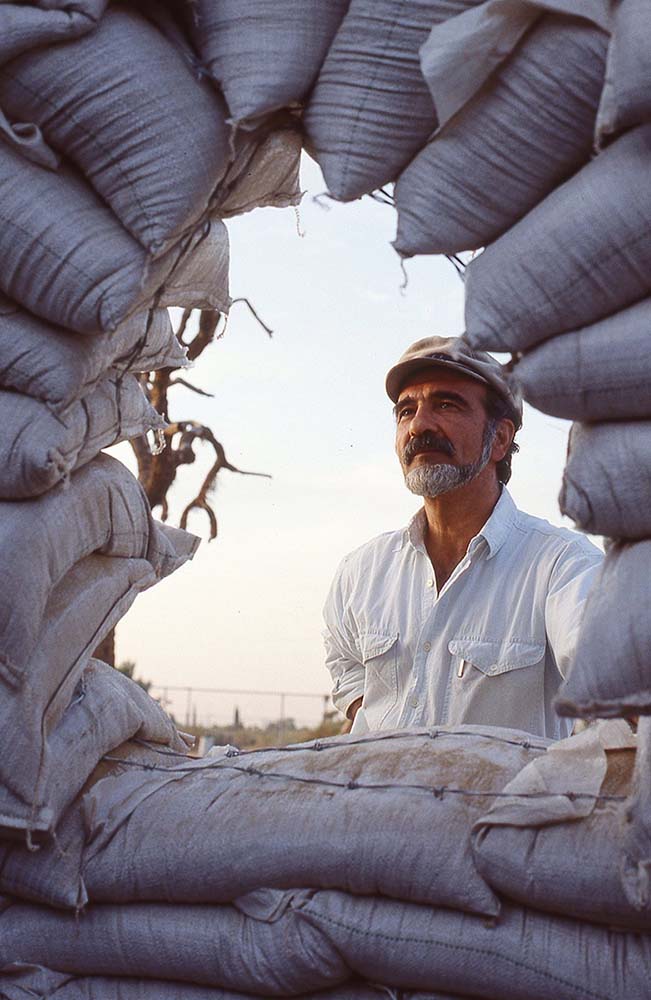
This technique was invented by Nader Khalili, an Iranian architect, in 1984, in response to NASA’s request to design future human settlements on the Moon and Mars. He, who had obtained his architectural certificate from California, USA and had a lot of experience in designing modern buildings, designed Superadobe with inspiration from the rich Iranian culture and architecture.
Later on, he built an eco-village in Hesperia California to show how this kind of sustainable architecture works. He also established his institute there named Cal-Earth, which is still continuing its work.
Through his work, he has inspired countless individuals to embrace sustainable practices and consider the impact of their choices on the environment.
INTRODUCTION
What is Superadobe?
Superadobe is a type of structure that is built using available and environmentally friendly materials (such as soil, sandbags and barbed wire) in a relatively short period of time. Due to its simple and dome-shaped structure, this type of building is extremely durable and strong, and at the same time, it can be consisted of one or more connected spaces and create beautiful architectural forms.
This technique has been published by NASA and has been approved by the United Nations, and in 2004 it received the prestigious Aga Khan Award in the field of architecture. This technology has also passed the filter of many tests and is in accordance with international standards, and in the latest news, it has received the ICC-ES number from the ICC Evaluation Service.

BENEFITS
Advantages of Superadobe
Superadobe construction is an innovative building technique that offers numerous advantages over traditional methods. Superadobes are created using long sandbags filled with a mixture of earth and stabilizers, such as cement or lime, which are stacked in layers to form walls. Here are some of the key advantages of them:
- Sustainability: Superadobe buildings are environmentally friendly, as they utilize locally sourced materials like soil and sand. This reduces the need for transportation of construction materials and minimizes the carbon footprint of the building process.
- Cost-effective: This method of construction is often more affordable than traditional building methods, as the materials are inexpensive and readily available. However, they can also be expensive depending on the labor costs and the materials used for the finishing phase of construction.
- Durability: Superadobe structures are known for their strength and durability. The thick walls provide excellent thermal mass, helping to regulate indoor temperatures and reduce energy consumption for heating and cooling.
- Disaster resistance: Superadobe buildings have been proven to withstand earthquakes, hurricanes, and other natural disasters. The flexible nature of the earth-filled bags allows the structure to sway and absorb the impact of external forces, making it a safe and resilient choice for high-risk areas.
- Versatility: Superadobe construction can be used to create a wide range of building types, including homes, schools, community centers, and emergency shelters. The technique can also be easily adapted to different architectural styles and designs.
Overall, Superadobe construction offers a sustainable, cost-effective, and resilient alternative to traditional building methods. With its many advantages, Superadobes are an excellent choice for those looking to build environmentally friendly, durable, and affordable structures.

Contacts
Building No. 5816, Way 1275, Sur Al Hail, Al Seeb, Muscat, Oman
(+98-915-106-9234)
earthartits@gmail.com
2024 | Mhsdesign