

Iran-banu Suoperadobe on Bumusa Island
Explore our Superadobe workshop in Bumusa Island, Iran! Earthartists built a Superadobe, ‘Iran-Banu,’ dedicated to the island’s community.
At EarthArtists, we are thrilled to introduce our latest architectural endeavor, set against the breathtaking backdrop of the Samamus Mountains in Rudsar, Iran. Rudsar Superadobe not only showcases our commitment to innovative design but also highlights the unique challenges and beauty of constructing in one of the most extraordinary locations on Earth.
Nestled within a stunning landscape, our project features one of the most complex Superadobe plans in the world, spanning an impressive 450 square meters. The design incorporates twelve elegant intertwined domes, along with a striking cylindrical tower that connects this structure to its resting hall which is built of concrete and glass.
The construction of this project presented formidable challenges, requiring meticulous planning and execution to navigate the intricacies of the Superadobe technique. However, the result is a seamless integration of architecture and nature, providing residents and visitors with panoramic views of the majestic mountains that surround it.
At EarthArtists, we believe that every project tells a story, and this one is no exception. It embodies the spirit of resilience, creativity, and a deep respect for the environment. We invite you to explore this remarkable journey with us as we continue to push the boundaries of architectural design in harmony with nature.
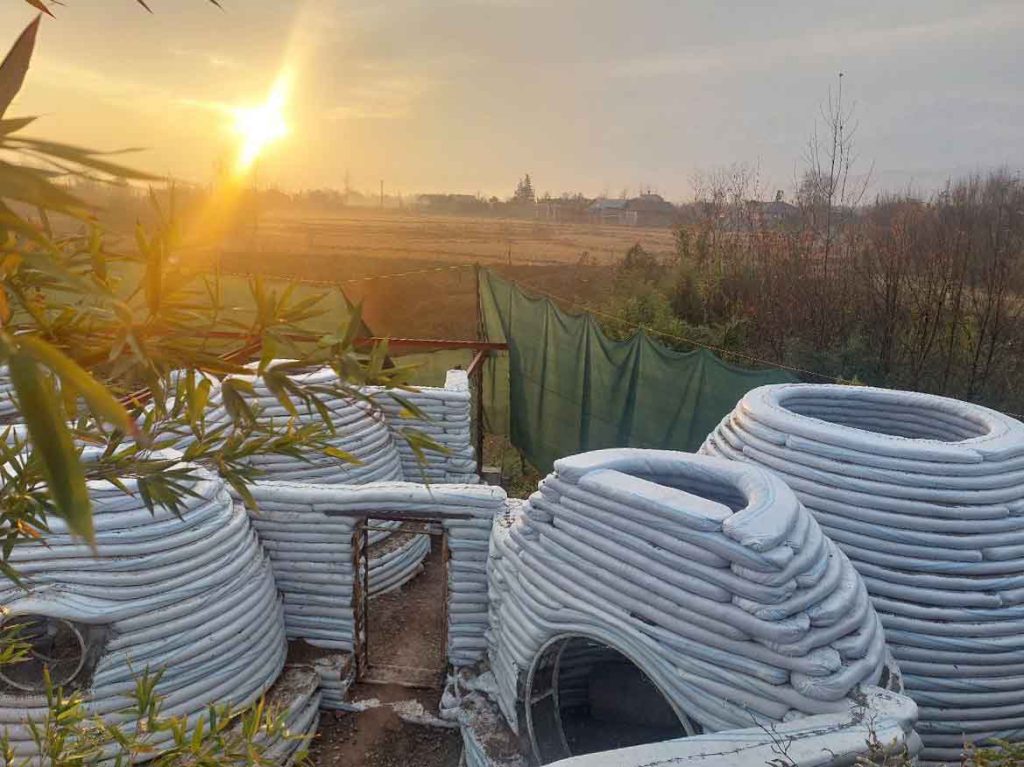
The Rudsar Superadobe project is not only built as a durable and sustainable structure, but it also has great impacts on society and the environment, which can become a model for other regions of the country and even the world.
– Use of natural and recyclable materials: Superadobe uses soil and sandbags as the main construction materials. These materials are highly recyclable and cause less damage to nature. Unlike traditional building materials that sometimes severely strain natural resources, using soil as the primary material creates less pollution and reduces the carbon footprint of construction.
– Resistance to weather conditions: Due to the high humidity of the Rudsar region, the insulating and breathable Superadobe walls naturally prevent internal moisture and prevent moisture from entering the building. These features allow Superadobes to last longer, even in areas with harsh weather conditions.
– Energy Saving: Due to their natural thermal insulation, adobe walls prevent heat from entering in the summer and heat loss in the winter. This feature reduces the need for cooling and heating systems, thereby reducing energy consumption and conserving natural resources.
– Long-term Sustainability: This type of construction will require less renovation in the long term due to the use of local and natural materials, and as a result, these structures can endure decades without the need for renovation.
– Local employment creation: Rudsar Ssuperadobe project creates job opportunities in the region by utilizing local labor and employing specialists in various fields. This job creation not only helps the local economy but also promotes technical skills and training for the youth of the region.
– Education and empowerment of the local community: In the construction process of this project, in addition to workers, local people can benefit from training courses and practical workshops in various fields of sustainable architecture and construction with natural materials. This training can promote environmental awareness and technical skills in the local community.
– Strengthening public awareness about sustainable architecture: This project, as a successful example of sustainable architecture, can increase public awareness about the importance of using natural materials and environmental friendliness in construction. This awareness can lead to changing attitudes and construction patterns at the national and even global levels.
– Cultural and social impacts: This project can also help strengthen cultural identity and expand Iranian architecture in the international arena as a successful example of updated Iranian architecture. These structures are not only technically and environmentally valuable, but also culturally they can be recognized as representatives of Iranian culture and history.
– Attracting tourists and those interested in eco-friendly architecture; This project can become a tourist destination for people interested in sustainable architecture and construction. Showing this type of architecture to tourists can help expand responsible tourism in the region and have positive economic impacts for the region.
– Environment and ecotourism: This project can be introduced as part of green tourism in the region. Given that this type of construction causes less damage to the environment than other structures, it can help develop sustainable tourism in the Rudsar region.
The Superadobe project in Rudsar is not only recognized as a resilient and eco-freindly structure, but its positive impacts on the local community and the environment can be used as a model for other projects in different regions of the country and the world. This project not only helps to preserve natural resources, but also strengthens the local economy and environmental awareness by creating employment and education.
Explore our Superadobe workshop in Bumusa Island, Iran! Earthartists built a Superadobe, ‘Iran-Banu,’ dedicated to the island’s community.
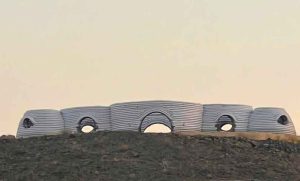
Ibra Superadobe Residence is a unique project with an area of 100 square meters, located on the peak of a mountain in the heart of Oman
“Boumusa” or “Abumusa”? which one is correct?

Building No. 5816, Way 1275, Sur Al Hail, Al Seeb, Muscat, Oman
(+98-915-106-9234)
earthartits@gmail.com
2024 | Mhsdesign